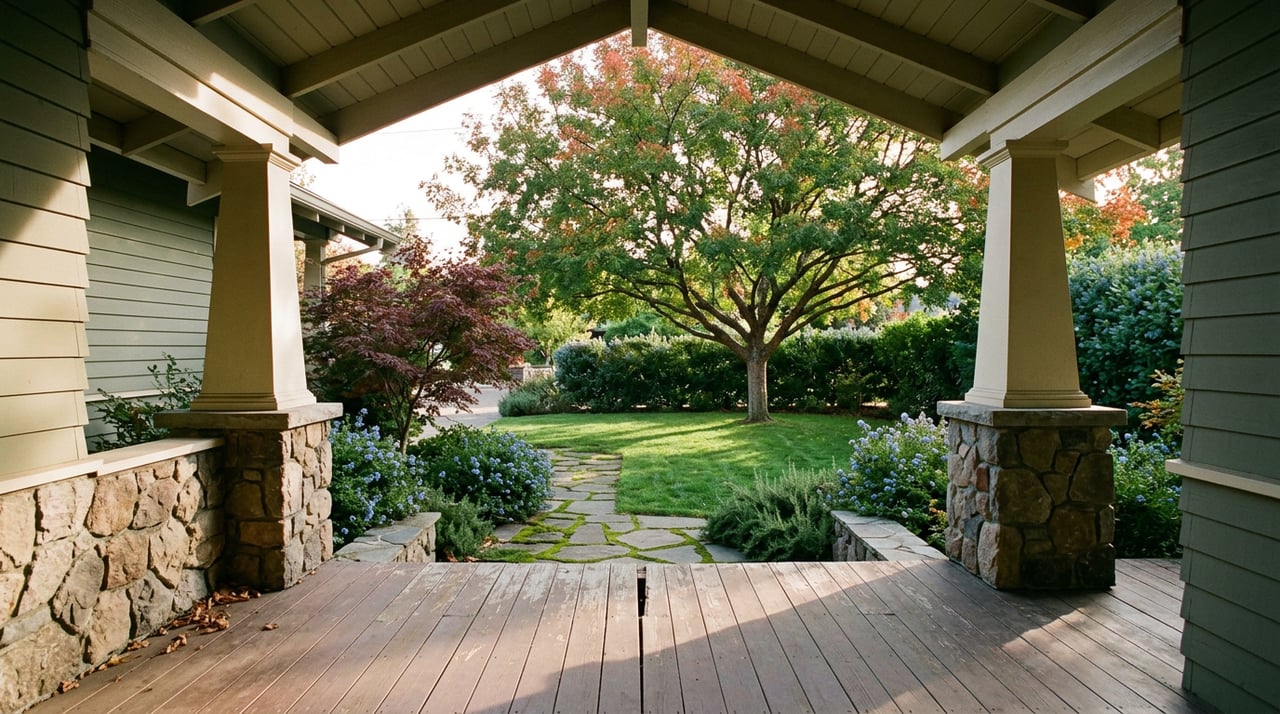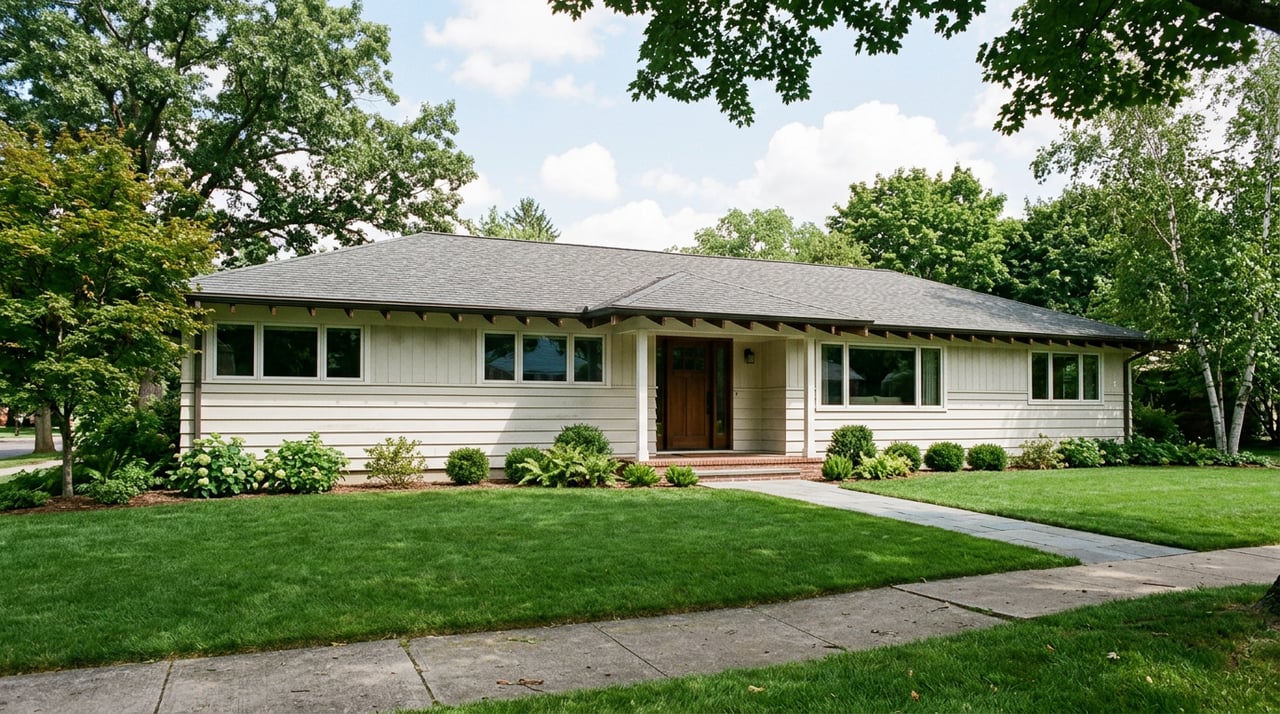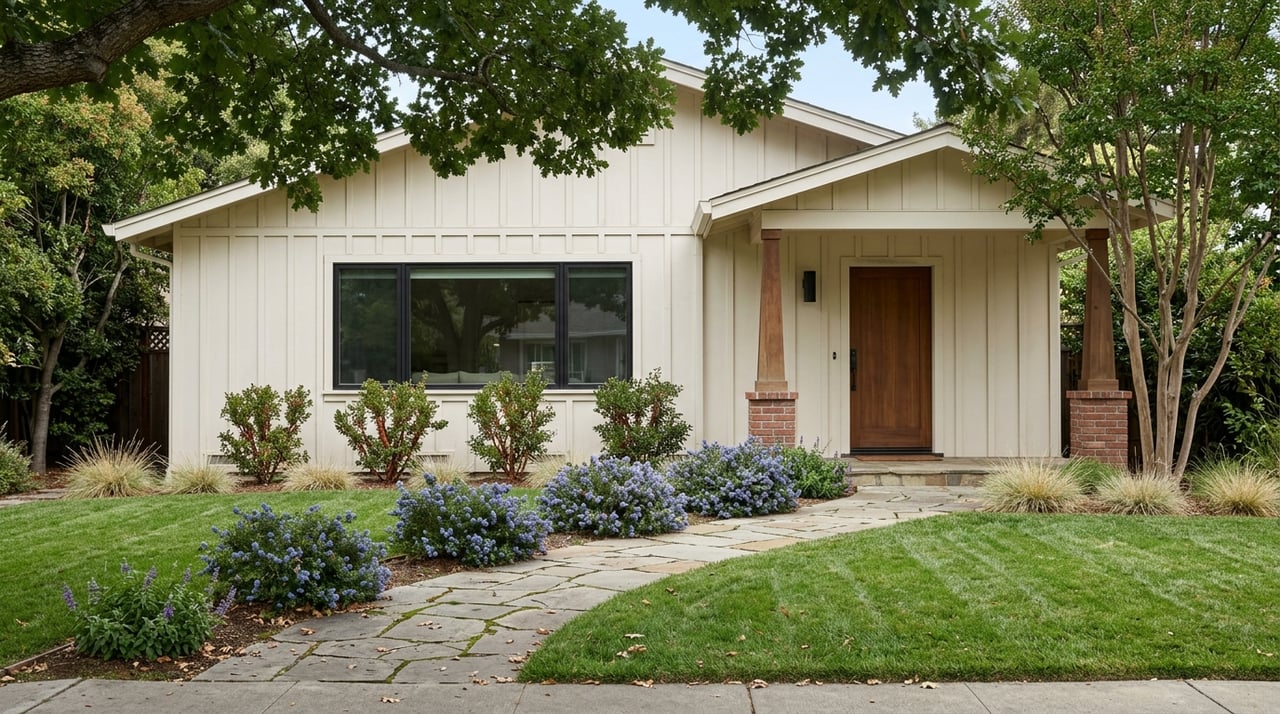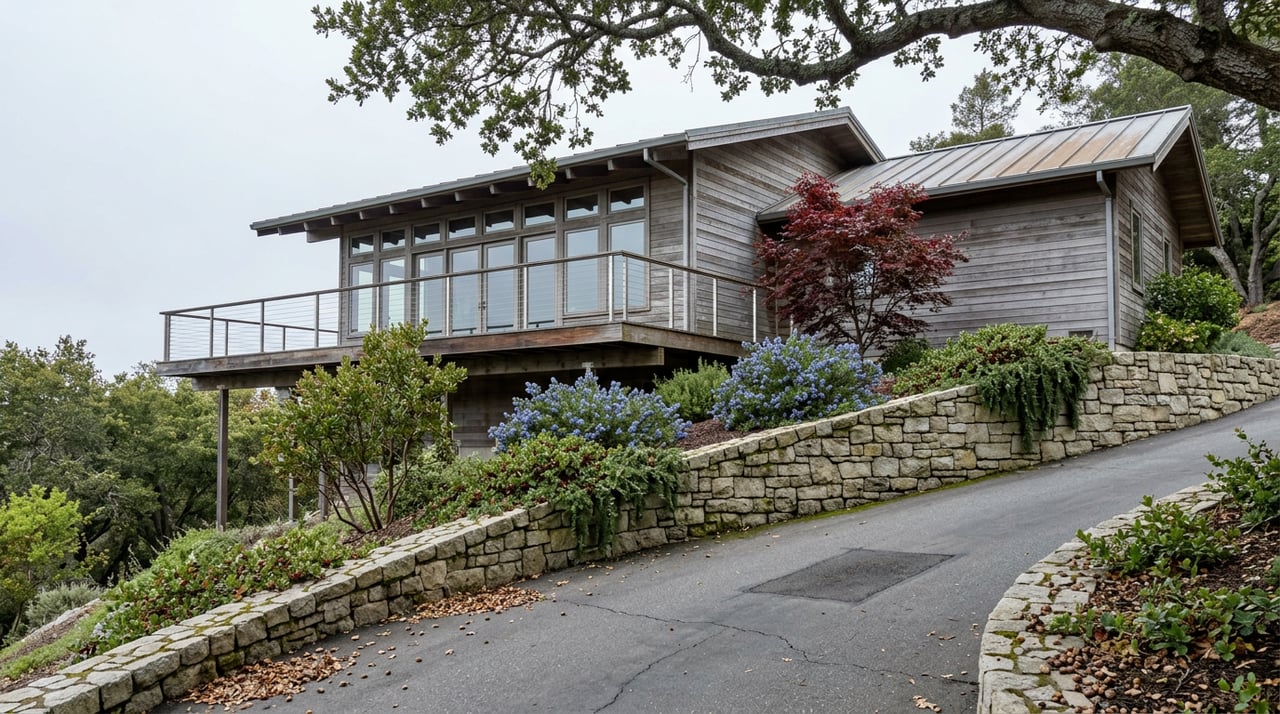
Drive up Miner Road on a summer evening and you'll understand why buyers fall for this pocket of Orinda. The canopy closes overhead, the houses appear in no particular order, a 1940s cottage here, a mid-century rancher there, and the hillside gives you the sense of being ten minutes from downtown and a hundred miles from anywhere at the same time. It's the kind of street that photographs well and sells itself before the first open house.
What the photos don't show is who owns the pavement under your tires. In much of Orinda, and especially in older hillside pockets like this one, that answer is not the city. It's the neighbors.
The Road Question Nobody Puts on the Flyer
Orinda's own Homeowner Guide states it plainly: the city contains roughly 30 miles of privately maintained roads. These are not the exception tucked away in some far corner. They run through established neighborhoods, they're rarely gated, and the public drives on them every day without any idea that the city has no maintenance obligation for the pavement they're using. The Guide is direct about why this matters to a buyer specifically: street names and signage won't tell you whether a road is public or private, and a title report should show whether a property includes the access easements that make a road private in the first place.
Miner Estates fits the profile for this kind of arrangement almost perfectly. The housing stock spans decades, from 1940s retreats to ranchers from the 50s and 60s to later hillside builds, and the terrain is sloped enough that early developers often built and dedicated roads privately rather than to city standard. Once that happens, it tends to stay that way. Orinda's Resolution 59-18, the city's private road acceptance policy, states that roads already served by an established homeowners association or similar maintenance entity are generally not eligible for future city acceptance, absent a council exception. Private, in other words, is usually permanent.
What This Summer's Paving Crews Are Skipping
Here's where the issue stops being theoretical and starts being visible on the ground right now. Orinda's 2025/26 Pavement Rehabilitation Project is scheduled to run from mid-July through October 2026, bringing repaving and pavement preservation work to streets across the city. It's a real, funded, dated project. It is also, by definition, a public roads project. A homeowner on a private stretch in Miner Estates can watch the crews work two streets over all fall and never see them turn the corner, because the city's paving budget was never available to that road to begin with.
That gap is the whole story in miniature. The same property tax bill funds public street work a few blocks away while doing nothing for the road serving your own driveway.
A Short Checklist Before You Write an Offer
| Check this | Why it matters in Miner Estates |
|---|---|
| Title report language on access easements | The city's own guidance says this is the most reliable way to confirm a road is private, since signage and naming conventions aren't dependable |
| HOA fee versus informal cost-sharing | A recorded HOA with a real reserve is different from a handshake agreement among neighbors, and only one of those has a mechanism to compel a slow-paying owner to contribute |
| Storm drain age and material | Older private developments often used corrugated metal pipe for drainage, which corrodes over time and is expensive to replace, and the city was rarely involved in installing it |
| Creek setback rules for any addition | Most creeks in Orinda are owned by the underlying property owners, not the city, and Municipal Code 17.4.6 sets setback requirements that matter on sloped lots like these |
The Fee on the Listing Isn't the Whole Story
Public listing records for one home on Miner Road show an annual HOA fee of just $20. That number tells you almost everything about how informal some of these arrangements can be. Twenty dollars a year covers very little beyond basic administration. It does not cover a repaving job, a failed culvert, or a retaining wall repair, and Resolution 59-18 is explicit that if a private road is ever to be brought into the public system, it has to be repaired or upgraded first at no expense to the city. That cost, whatever it turns out to be, sits with the small group of homeowners on that stretch, not with Orinda's broader tax base.
A buyer who only reads the HOA line on a disclosure and assumes it functions like a full-service association in a planned community is making an assumption the paperwork doesn't actually support. It's worth asking directly what the fee has been used for, how often it's been raised, and whether there's a reserve for anything larger than routine upkeep.
What Recent Miner Road Sales Actually Tell You
None of this appears to be scaring buyers off. Homes on Miner Road have continued to trade at Orinda hillside prices, with one sale closing at $4.4 million in June 2025 and another at $3.875 million in February 2026. Those numbers sit comfortably in the range this part of Lamorinda has commanded for years, which tells you something important: the market has not meaningfully priced in the private road question. Buyers are paying for the setting, the square footage, and the privacy, and the road status isn't showing up as a discount anywhere in the sale price.
That's exactly why it needs to surface somewhere else, during due diligence, before the offer is written rather than during the week before closing.
Creek Setbacks Matter More on a Slope
If part of the appeal of a Miner Estates property is room to eventually add on or build an accessory unit, the creek setback question deserves the same early attention as the road question. The city generally doesn't own or control creeks in Orinda, which means maintenance responsibility typically falls to the underlying property owner, and any construction near a creek has to work within the setbacks defined in Municipal Code 17.4.6. On a hillside lot, where the buildable footprint is already limited by slope, this is not a detail to discover after you've fallen in love with a floor plan for an addition.
This Isn't Settled, and That's Useful to Know
When Orinda installed Brandyn Iverson as mayor in December 2025, private roads came up as one of the council's ongoing "third-rail issues," a problem the city has wrestled with for years without a clean resolution. The Infrastructure Subcommittee that Mayor Darlene Gee and Vice Mayor Latika Malkani formed to study the issue is still gathering data on road ownership and condition heading into 2026, and council discussion has touched on models used in other towns, like grant programs in San Anselmo, alongside existing local arrangements such as the Orinda Woods road maintenance agreements.
None of that changes anything for a buyer closing on a Miner Estates home this year. The rules on the books today are the rules that apply to your transaction. But it does mean the responsibility for a private road isn't going anywhere in the near term, and it isn't going to quietly become the city's problem while your escrow is open.
A Few Things Buyers Ask
Does a private road affect my ability to get a mortgage? Lenders generally want to see the recorded easements and any maintenance agreements reflected clearly in the title work before they'll clear final underwriting. Flagging the road status early with your agent and lender avoids a surprise request for documentation in the last week before closing.
How do I find out if a specific Miner Estates address is on a private road? Don't rely on the street name or how the road looks. The city's own guidance points to the title report as the place this shows up, and in some cases it takes a professional, whether that's a title officer or your agent working directly with the city, to confirm access easements definitively.
Will the city eventually take over these roads? Not automatically. Resolution 59-18 keeps roads already served by an established HOA generally ineligible for future city acceptance, and the subcommittee's current work is focused on gathering data rather than changing that policy.
Buying in Miner Estates means buying into privacy, mature trees, and a kind of hillside quiet that's hard to find closer to downtown. It can also mean buying into a road ownership structure that never shows up in a listing photo. Sort out which one applies to a specific address before you write the offer, not after.
If you're looking at a property in Miner Estates or anywhere else in Lamorinda and want a second set of eyes on exactly this kind of detail, Gillian Judge Hogan has spent years working these hillside streets and knows which questions to ask before they become closing week surprises. Find home. Find happy.