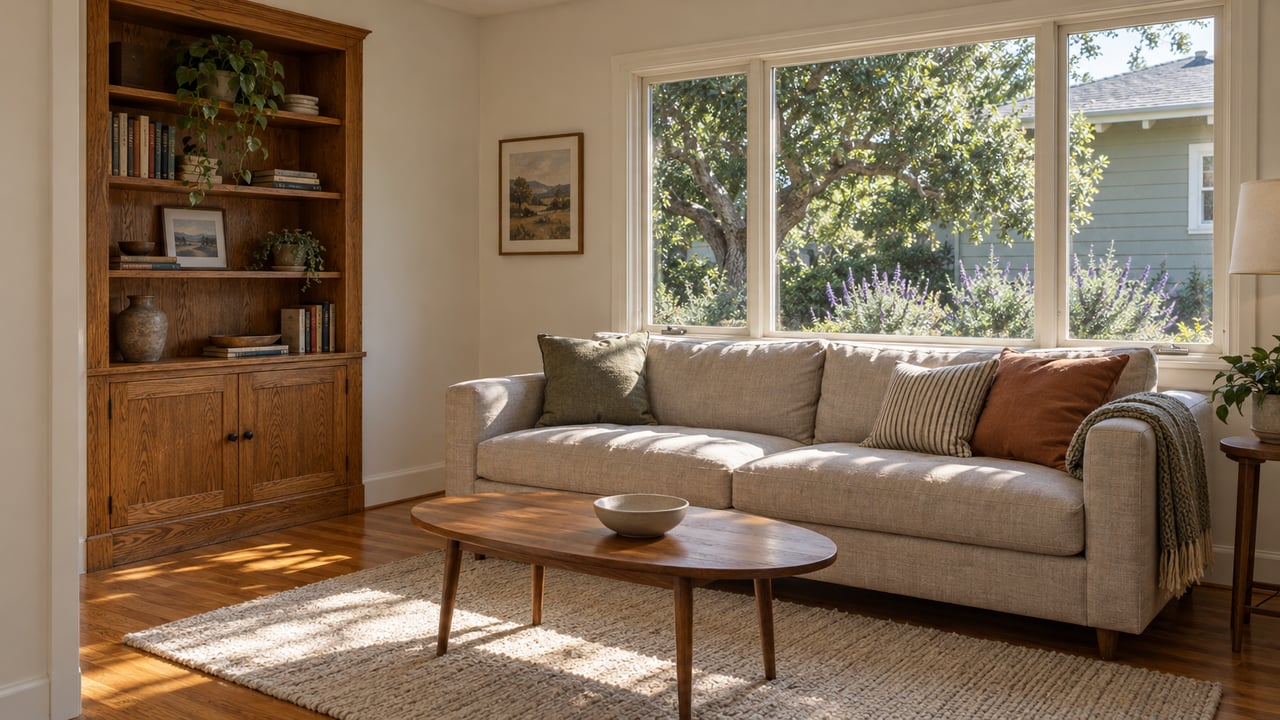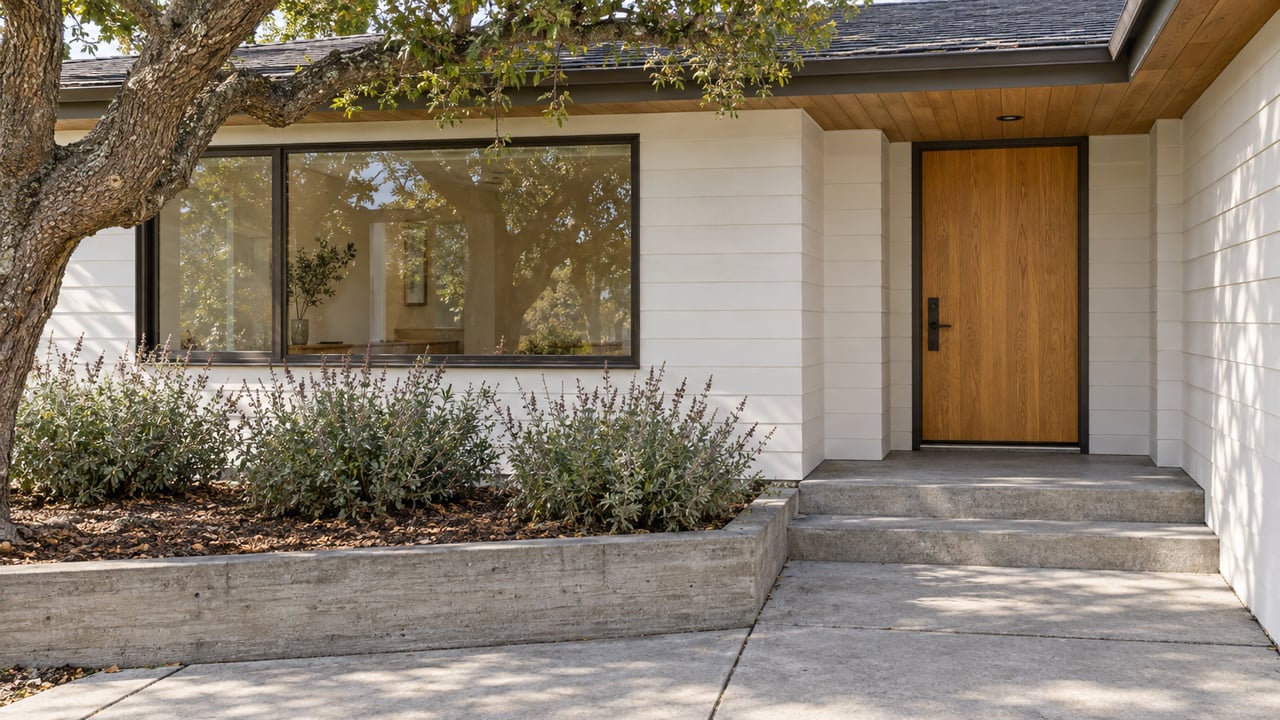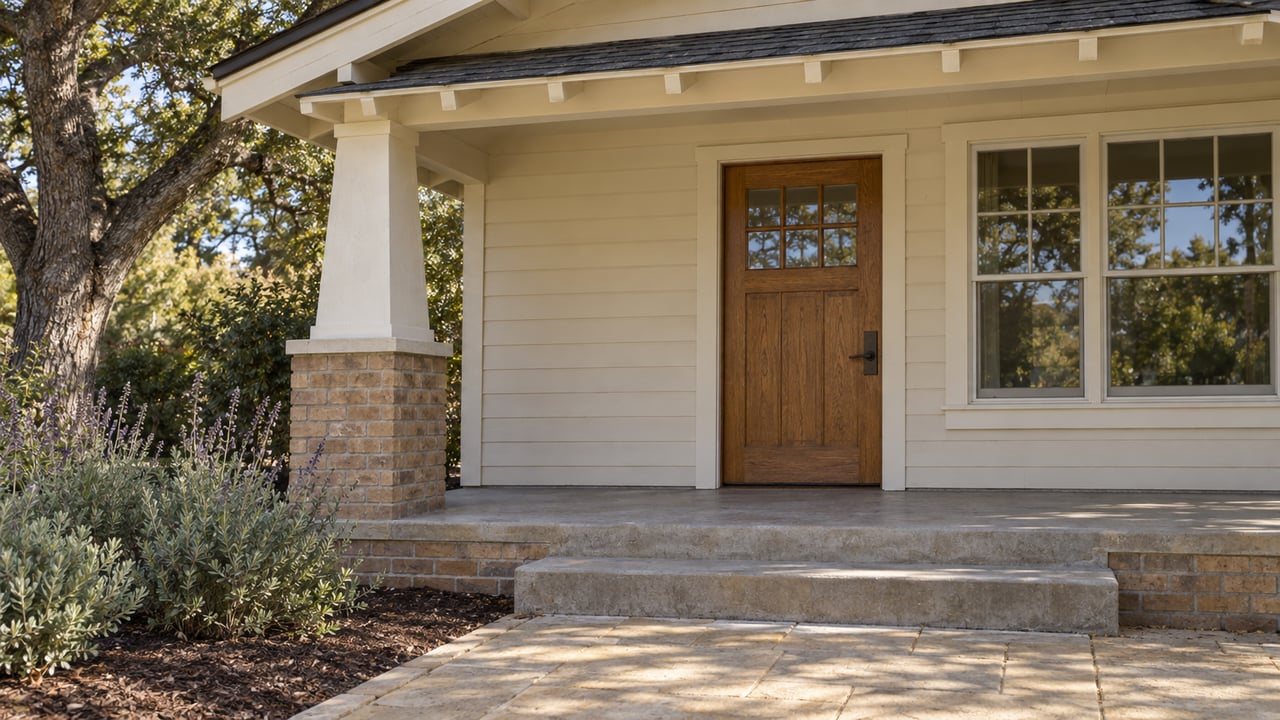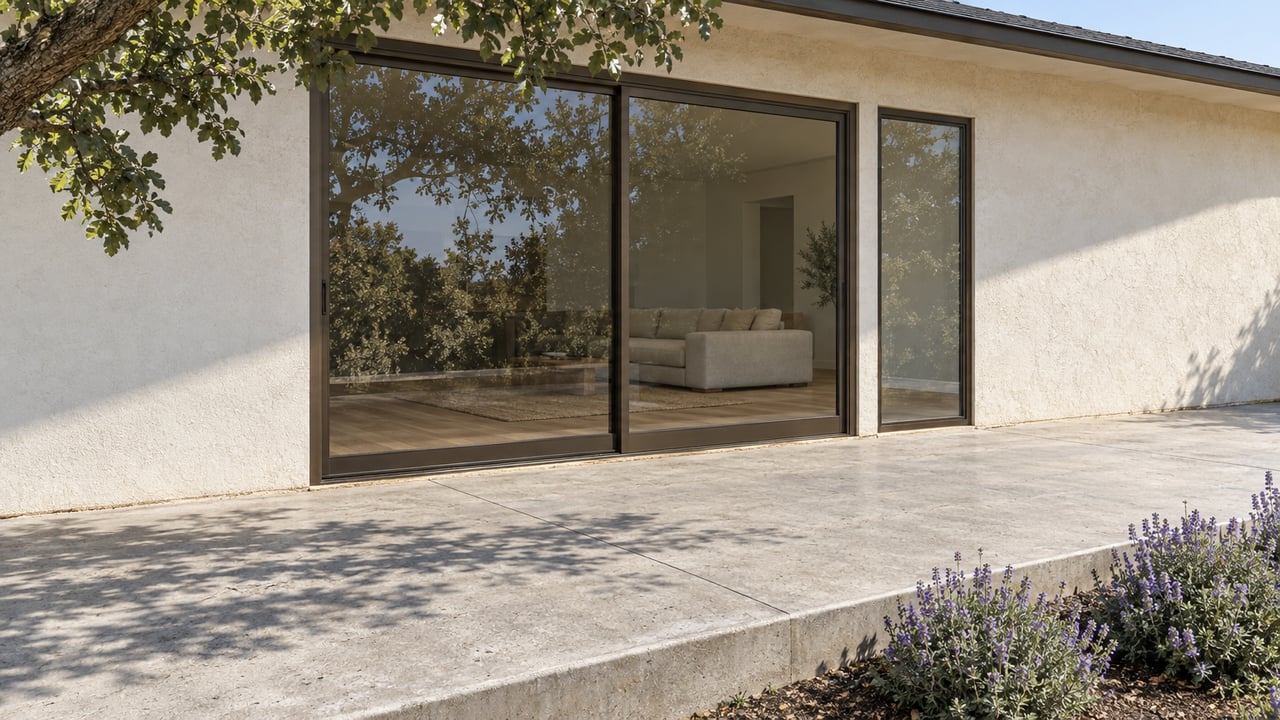
Fifty reserved parking spaces at the Lafayette BART station have been out of commission since late February 2026, and when construction wraps this summer, nineteen of them are gone for good. That is not a footnote for commuters. It is a live demonstration of the single mechanism that has quietly split Lafayette into two different real estate markets, one where the address is worth a premium because you can walk or bike to the train, and one where the address is worth a premium precisely because you don't need to.
Most buyers cross-shopping Lafayette right now are working from a single number: the citywide median. That number is misleading them, and the parking lot explains why.
One Station, One Lot, and a Construction Project That Made the Math Worse
Lafayette is served by exactly one BART station, a single island platform sitting in the median of Highway 24. Compare that to Walnut Creek, a few minutes east, which has two stations and meaningfully more parking capacity. If you live in Lafayette and want to drive to the train, you have one lot to compete for.
That lot got smaller this year. On February 23, 2026, the City of Lafayette and BART began construction on the Town Center Pathway and BART Bike Station project, a joint effort to finally connect the south side of the station to downtown with an ADA-compliant walking and biking path. The city awarded the $2.59 million construction contract to Integra Construction Services in October 2025, and the full project comes in around $3.2 million, funded mostly through Contra Costa County's Measure J transportation sales tax and BART's Measure RR bond funds.
The tradeoff is parking. About 50 reserved spaces in Lot A closed for the duration of construction, leaving roughly 70 available, and once the work is done, 19 of those spaces will be permanently repurposed for a new public plaza and passenger turnaround. In exchange, Lafayette gets a secure, unattended bike station with room for 82 bicycles, a new plaza, and a suspended public art piece called Dandelion Seeds, fifteen hand-formed stainless steel sculptures by Kinematics Lab designed to move in the wind. The City of Lafayette's project page has been posting monthly construction updates since work began, and the city expects the whole thing finished by the end of summer 2026, which is roughly now.
Read the project list at face value and it looks like a bike-friendly upgrade. Read it as a real estate signal and it looks like the city permanently reducing car-commute capacity at its only station while investing new money in walking and biking infrastructure instead. Lafayette also just secured $3.7 million in state funding to build the next segment of a separate trail, the Aqueduct Pathway, connecting Dolores Drive to the BART station, part of what officials describe as a broader push to make it possible to reach the station without a car. The direction of travel, literally and financially, favors the pockets of Lafayette where a car was never the plan.
What Driving to BART Actually Costs You
If you do drive, the current BART fee structure adds a layer of friction that's easy to miss until you're living with it. A reserved space is only guaranteed until 10am. Daily fee parking runs about $3.40, single or multi-day reserved parking starts around $4.50 per day, and a monthly reserved pass runs about $93.80, on top of whatever your mortgage already costs. Parking is free after 3pm on weekdays and all day on weekends, which tells you plainly when the lot is under the most pressure: the standard commute window, exactly when a reserved space stops being guaranteed.
None of this is disqualifying. Plenty of Lafayette buyers drive to BART every day and it works fine for them. But it is a real, recurring cost and a real, recurring gamble that a home three-quarters of a mile away, walkable to the station or the Lafayette-Moraga Trail, simply does not carry.
The Same City, Two Different Products
Treating "Lafayette" as one market collapses at least five distinct sub-markets, each shaped by a different relationship to that one station and to the paved trail network that runs alongside it.
| Relationship to BART | What the lot and home typically look like | |
|---|---|---|
| Downtown & The Trails | Walkable to the station and Mount Diablo Boulevard shops | Smaller lots, bungalows and ranch homes, condos generally $1M to $1.3M |
| Burton Valley | Connected via the paved Lafayette-Moraga Regional Trail, not a walk to BART itself | Ranch homes built mostly 1940s-1970s, roughly $1M to $3M, cul-de-sac streets |
| Happy Valley | Requires a drive; furthest from the platform | Estate lots often over an acre, homes commonly above $3.5M, some parcels well over $6M |
| Springhill | Requires a drive; hillside setting near Briones Regional Park | Larger lots, semi-rural feel, median around $2.32M |
| Reliez Valley | Requires a drive; borders Walnut Creek and Pleasant Hill | Large custom lots, roughly $1M to $5M, rural character |
The pattern is not subtle. The neighborhoods closest to the platform trade lot size for walkability. The neighborhoods furthest from it trade car dependence for space and privacy. Burton Valley sits in an interesting middle position: you won't walk to BART from there, but the Lafayette-Moraga Trail gives residents a genuine car-free option for reaching downtown and the station by bike, which is part of why it remains one of the more sought-after pockets in the city.
The Number That Doesn't Match the Story
Here is where the citywide median actively misleads a cross-shopping buyer. As of August 2026, four different sources put Lafayette's typical home price in four different places: one portal's median list price sat around $1.74 million, down about 9 percent year over year; a separate home value index put the typical value near $1.91 million, down closer to 7 percent; a third source's average sale price came in around $1.69 million, down nearly 20 percent; and live MLS data from early August showed a median list price closer to $1.93 million. That's a spread of roughly a quarter of a million dollars, on the same city, in the same month.
The gap isn't a data error. It's a composition effect. Lafayette sells somewhere in the neighborhood of fifty to one hundred homes a month, spread across a $1 million downtown condo and a $6 million Happy Valley estate. When the mix of what happens to close in a given month shifts even slightly toward one end, the citywide median or average swings by hundreds of thousands of dollars, independent of whether any single home actually gained or lost value.
That composition effect is visible at the neighborhood level too. Happy Valley's average sale price is running at $2.57 million, up 23.8 percent year over year, even as the citywide figures were falling. That doesn't mean every home in Lafayette is worth more. It means more of what's selling lately is selling at the expensive, car-dependent end of the market, while the citywide average absorbs the pull from smaller, closer-in properties elsewhere. A buyer reading only the headline median has no way to see that split. A buyer reading it neighborhood by neighborhood does.
What This Means If You're Choosing Between Pockets Right Now
If you're deciding between a Downtown or Trails property and something up in Happy Valley or Springhill, the parking project is a useful forcing function for a question you should be asking anyway: how much is the walk or the bike ride actually worth to your daily life, and how much are you willing to pay in commute friction, monthly parking fees, or an earlier alarm clock to trade it for a bigger lot?
The infrastructure investment currently underway, a shrinking car lot and a growing bike and pedestrian network, suggests the city is betting on the walk/bike side of that trade for the long run. That's not fully priced into the citywide median yet. It shows up, if you look, in how the smaller pockets are trading relative to the larger ones.
Frequently Asked Questions
Will BART parking in Lafayette go back to normal once construction finishes? No. Once the Town Center Pathway and Bike Station project is complete, 19 of the roughly 50 closed reserved spaces will be permanently repurposed for the new plaza and vehicle turnaround, not restored.
Does living near the Lafayette-Moraga Trail count as BART-walkable? Not literally, but it's the next best thing for car-free access. The paved trail runs through Burton Valley and connects toward downtown and the station corridor, which is part of why homes along it have held steady interest despite not being a true walk to the platform.
Is the parking squeeze the reason Happy Valley's average price rose 23.8 percent? Not directly. That year-over-year figure reflects a full year of sales, and the construction only began in late February 2026. It's better read as evidence of a structural pattern the parking story makes easier to see: Lafayette's most expensive, car-dependent pocket and its most walkable pocket are behaving like two different markets, not one.
If you're trying to figure out which Lafayette pocket actually fits how you live, not just what the median price implies, that's a conversation worth having before you start touring. Gillian Judge Hogan has spent years walking these streets, knows which blocks are a bike ride from the platform and which ones require a second car, and would be glad to help you sort out which tradeoff is right for you. Work With Gillian.